Grupo Argos Foundation

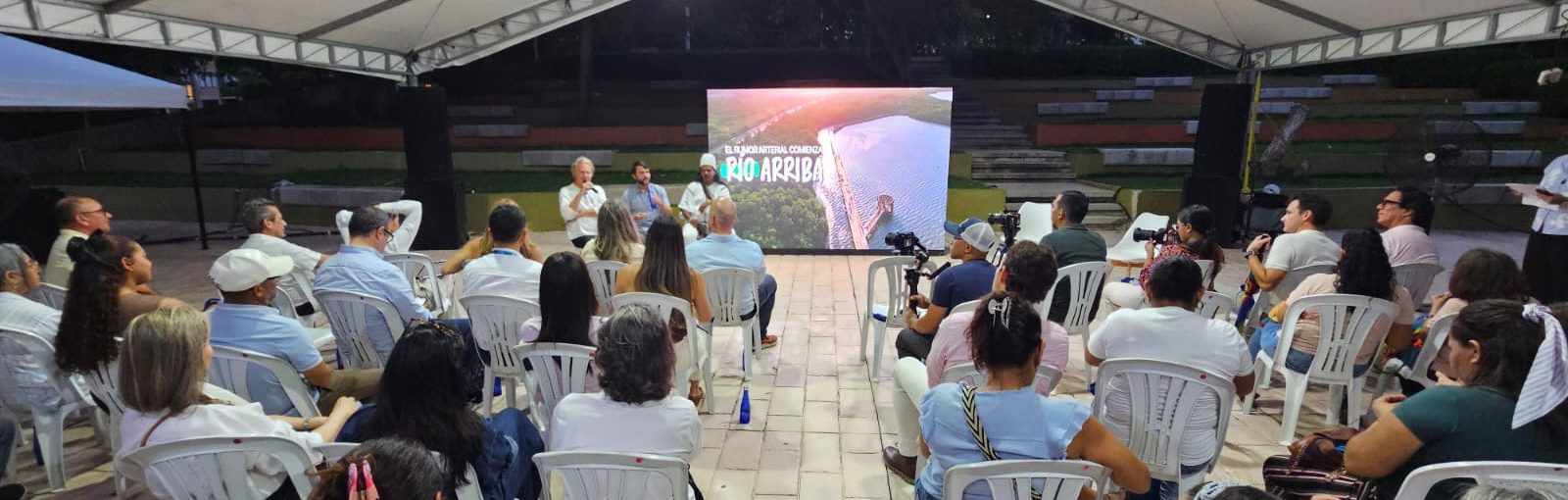
As part of the pre-launch of the documentary Río Arriba, Grupo Argos promoted a conversation on the importance of the Magdalena River in the history and development of Barranquilla, and on the role of biodiversity, parks and ecological corridors in building a more sustainable city.
At this event, titled El rumor arterial comienza Río Arriba (The Arterial Rumor Begins Upriver) and held at Parque Realismo Mágico in Barranquilla, the participants were renowned anthropologist, writer and explorer Wade Davis; Jaime Pumarejo, Executive Director for Colombia and Peru at the IDB; Ilva Gómez, Legal and Sustainability Manager of the Urban Development Business at Grupo Argos; and Ruby Rubio, creator and director of Laboratorio de Ciudad.
The conversation served as the backdrop for the pre-launch of the documentary Río Arriba, a project that traveled through strategic territories such as the Orinoco and the Sierra Nevada de Santa Marta to shed light on the connection between natural diversity and the country’s cultural wealth, with a particular focus on the experiences of communities that have managed to preserve their ecosystems. In this context, the speakers traced the history of Barranquilla through its relationship with the Magdalena and reflected on the role that the relationship between communities and natural ecosystems plays in building more sustainable, resilient cities connected to nature. The conversation delved into the river’s relationship with the economic and social development of the city.
“Promoting conversations like this helps build a greater understanding of the value of ecosystems and the importance of coordination among companies, institutions and communities to drive development that recognizes environmental integration in urban infrastructure. The future of our cities also depends on our ability to protect biodiversity, connect ecosystems and make nature an ally of development and of the quality of life of communities.”
María Camila Villegas, Executive Director of the Grupo Argos Foundation
Grupo Argos’s relationship with Barranquilla also has its roots in the Magdalena River, which gave life to Cementos del Caribe to produce the materials with which the city and Colombia’s Caribbean region grew, internationalize its industry and drive its urban development, incorporating criteria of sustainability, public space and ecological connectivity. In Barranquilla, this vision takes shape in initiatives aimed at connecting parks, promoting tree planting and strengthening ecological and bird corridors.
“Barranquilla has shown that a city’s development can evolve hand in hand with its natural surroundings. At Grupo Argos we have accompanied that transformation, moving from supplying the materials with which the city grew to driving projects that integrate infrastructure, public space and biodiversity. Today we understand that parks and ecological corridors are not isolated elements, but a living network that connects ecosystems, improves people’s quality of life and helps build a more sustainable and resilient city.”
Ilva Gómez, Legal and Sustainability Manager of the Urban Development Business at Grupo Argos
Río Arriba is a documentary that offers a look at the relationship between rivers and territories, recognizing their influence on the culture, economy and identity of communities.