
Double Materiality
At Grupo Argos we play the role of active strategic architect, leading and accompanying the monitoring of the general sustainability model of the Business Group, with a broad vision of trends and risks, and promoting the setting of goals and objectives in our strategic businesses and portfolio investments.
What is double materiality?
Managing investments responsibly implies understanding which Environmental, Social, and Governance (ESG) matters are relevant to our investments and to the environment. For this reason, we conduct a double materiality analysis through a methodology that evaluates the key matters:
- Impact materiality: considers the effects that Grupo Argos’s operations and value chain may have on the environment and society.
- Financial materiality: considers the effect of risks and opportunities from the environment on the financial and strategic performance of Grupo Argos.
This exercise, aligned with the main international sustainability standards, is the roadmap on which the focus areas of our strategy are established for a three-year period and allows us to adapt to changes in the environment, market dynamics, and the expectations of our stakeholders.
How did we do it?
We followed a structured five-step methodology that allowed us to rigorously and participatively identify the matters that matter most to our company and to our Stakeholders:
We reviewed our corporate strategy, policies, and operating frameworks and compared them against global trends, sector best practices, and international regulatory frameworks. This step provided us with a comprehensive view of the context in which we operate.
Based on the benchmarking, we identified 11 preliminary matters that served as the starting point to structure and guide the process.
For each matter, we assessed its impacts, risks, and opportunities with the participation of representatives from internal and external stakeholders, including members of the Board of Directors. This step was key to understanding each matter from the dual perspective: its effect on the environment and its financial relevance to the company.
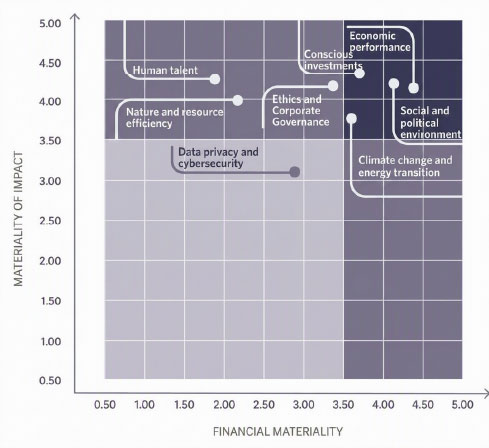
The inputs from the previous steps were used to rate and assign a priority level to each of the identified matters. As a result, the material topics that must be proactively managed to contribute to the objectives set in the corporate strategy, from both the financial and impact perspectives, were defined. For their determination, a fixed threshold of 3.5 (scale 1–5) was established, ensuring that only those topics presenting a significant level of criticality in terms of impact or risk are considered material.
The results were reviewed and approved by the Steering Committee, and they will be part of the agenda of the Sustainability and Corporate Governance Committee during 2026.
What is a material change?
A material change occurs when the relevance of Environmental, Social, or Governance (ESG) topics is modified as a result of transformations in the global context, in the business reality, or in the expectations of our stakeholders. These transformations may imply variations in the importance of the topics and, consequently, require adjustments in the way we manage them, in the indicators we use to measure them, or in the targets we set for ourselves. These adjustments take place within the framework of the company’s Double Materiality update or review processes and may reflect the need to evolve our management to ensure its ongoing alignment with the business strategy and with the challenges and priorities of the environment.
Material topics
As a result, we identified 7 material topics that apply both to Grupo Argos as an infrastructure asset manager and to our businesses. Each one has a different level of relevance depending on the main activities of each business:
If you would like to learn in detail about the relevance of each of the seven identified material topics, their management throughout the year, progress achieved and most significant milestones, as well as the future outlook through short-, medium-, and long-term goals, along with associated challenges and opportunities, we invite you to explore our latest Integrated Report.
Encompasses management of the employment cycle, including attraction, development, and retention, through strengthening succession programs, career plans, compensation schemes, and clear policies and practices that enable professional growth, well-being, diversity, inclusion, and labor relations at all levels within the organization.
Material impacts, risks, and opportunities
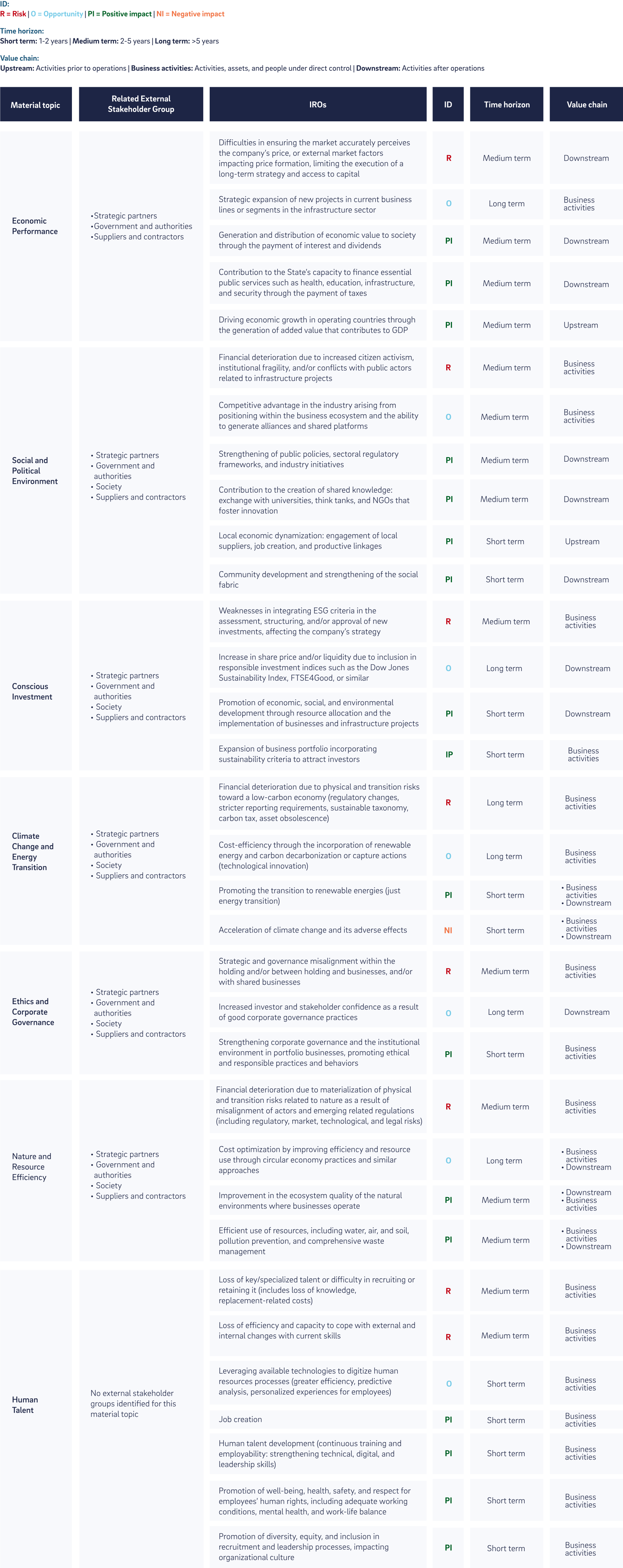
Our double materiality process allowed us to identify the most relevant topics and understand how they manifest in our operations and in the environment.
The following table presents the IROs (Impacts, Risks, and Opportunities) identified for the Company. The impacts correspond to the effects that our activities generate on the environment and society, while the risks and opportunities reflect the financial and strategic implications derived from ESG topics.
Stakeholders
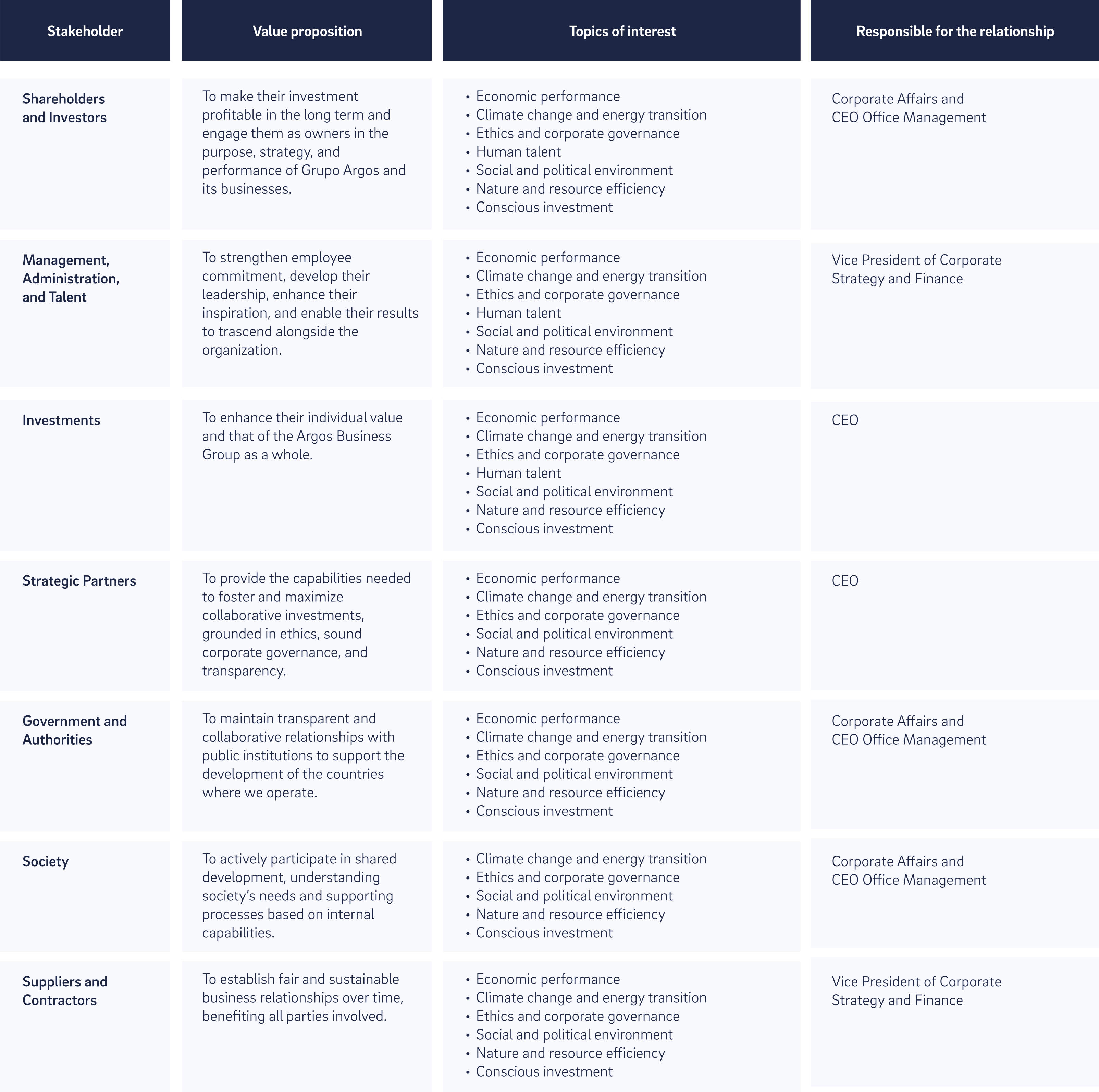
We identify and prioritize the Stakeholders based on their level of dependency and influence on Grupo Argos’ strategy. This process was carried out in accordance with the Stakeholder Engagement Standard (SES), published by Accountability (AA1000).
Through different engagement mechanisms, we collect their opinions regarding our business activities and communicate the progress of our management. This ongoing, transparent, and differentiated dialogue constitutes the foundation upon which mutual trust is built, enabling us to remain over time.
Identification and prioritization
1 We conducted an analysis to identify the key players in the two-way interaction between the Stakeholders and the organization.
2 We prepared in coordination with the different areas of the company a list of potential stakeholders (including communities in the operating area, those involved in the urban development business, and others who may be in a vulnerable situation), with whom we analyzed the level of involvement or closeness that the different identified groups have with the organization and the degree of impact or potential effect of our issues on them, to ensure their inclusion in the mapping, regardless of their final prioritization level.
3 Based on the results, we defined the prioritized stakeholders to respond more effectively to their expectations and strengthen the generation of comprehensive value.
Below, we present our prioritized Stakeholders and the elements that guide engagement with each of them: