Grupo Argos Foundation

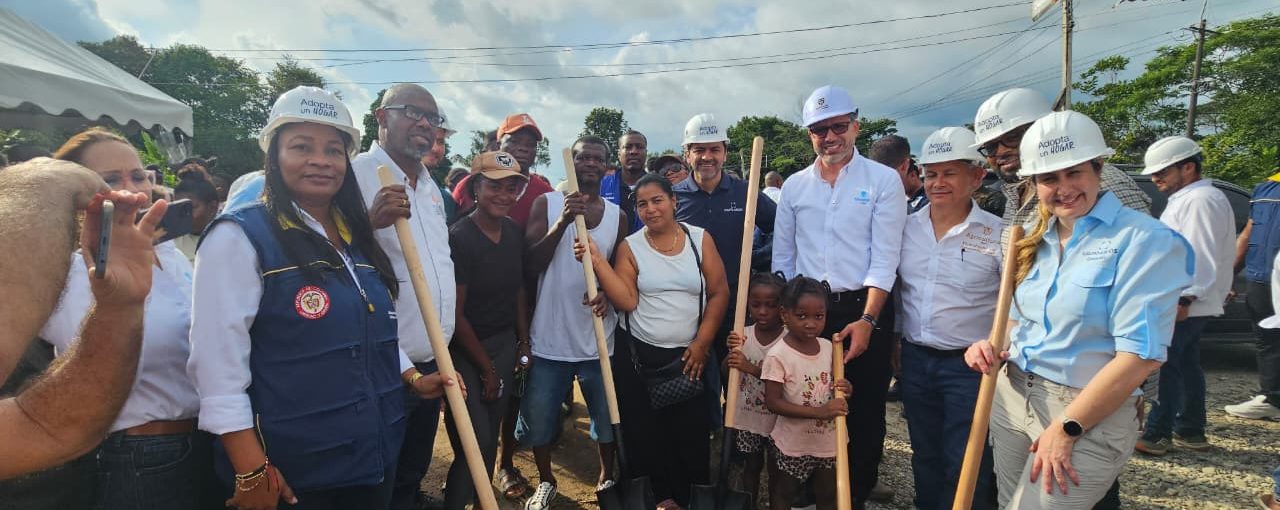
Three months after the earthquake that struck western Colombia, Adopta un Hogar, under the leadership of the National Government, the Ministry of Housing, and the Chocó Governor’s Office, officially began construction of 92 homes in the El Dos district of Unión Panamericana, one of the areas prioritized in Chocó’s reconstruction.
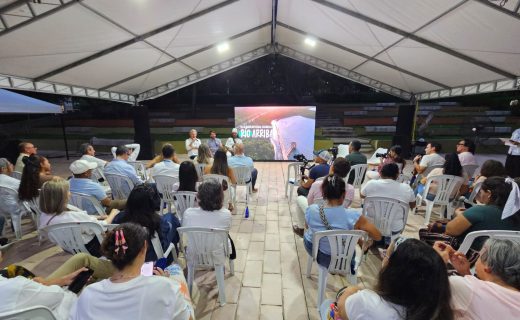
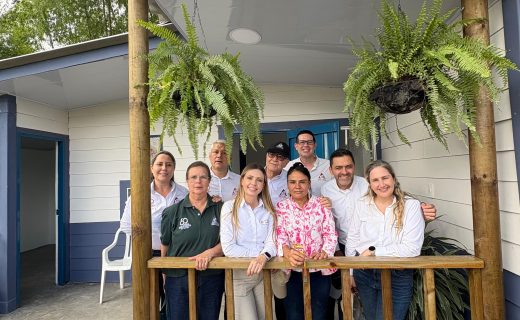
The start of construction was marked by a symbolic groundbreaking ceremony with the community, the National Government, and representatives of Adopta un Hogar’s partners. It is the program’s first clustered housing development and marks a new stage in its execution. The first individual homes made it possible to validate the social, technical, and construction model in different regions; the challenge now is to build dozens of homes simultaneously.
“We are on the ground bringing together all available capabilities to move forward with reconstruction and doing what is needed to deliver safe, responsible, and dignified solutions to families. The start of these 92 homes in Unión Panamericana demonstrates the value of the coordination led by the National Government and the work of the Ministry of Housing in the direction the country needs.”
Jaime Andrés Beltrán, Minister of Housing, City and Territory.
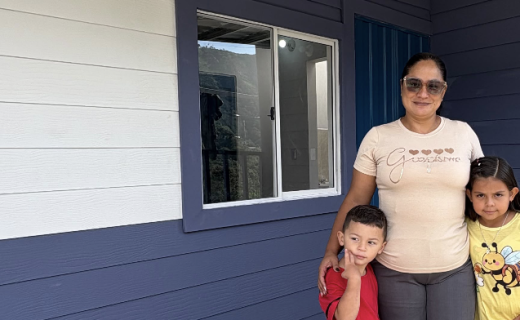
The program of Grupo Argos and Nicky Jam has already delivered four homes in the country, located in Quibdó, Chocó; Ciudad Bolívar, Antioquia, where the second home was delivered on Wednesday, November 11; and Circasia, Quindío. Now, in Unión Panamericana, the initiative plans to deliver the first 40 homes in December 2026.
“Three months ago we made a commitment to families and to the country to put the capabilities we have built over the years at the service of reconstruction. The first four homes allowed us to validate the model on the ground, and today we are taking a fundamental step with construction at scale. The homes in Unión Panamericana are possible thanks to the trust of more than 6,500 donors and 200 companies, and the leadership of the National Government, headed by Minister Jaime Andrés Beltrán, the local authorities, and the communities.”
María Camila Villegas, executive director of the Grupo Argos Foundation.
The project is based on the profiling work carried out with families affected by the earthquake in Unión Panamericana and on information gathered by public institutions in the area to guide the intervention. Adopta un Hogar prioritizes its solutions through a process coordinated with the communities, the National Government, and departmental and municipal authorities, combining social and technical criteria.
One of the project’s distinguishing features will be its architectural design. The homes will have two floors and 52.8 m² of floor area, plus an additional 25 m² planned for future expansions that families can build. Each unit will be six meters wide and have a private yard; the project is organized in blocks of 16 homes. The concept draws on the incremental housing model developed by Chilean architect Alejandro Aravena after the earthquake and tsunami that struck Chile in 2010. Among the projects that came out of that process was Villa Verde, developed between 2012 and 2013 under a progressive housing logic in which solid, planned initial solutions were delivered that allowed families to expand them later without compromising their structure or the urban quality of the development.
In Unión Panamericana, that inspiration translates into homes that deliver a complete and safe solution from the start, while also incorporating, by design, the possibility of growing in an orderly way by up to an additional 25 m², according to each household’s evolution and future needs. The homes will retain the industrialized, earthquake-resistant building platform that Adopta un Hogar has been implementing, adapting it to Chocó’s climatic, social, and territorial conditions.
“From day one we made a commitment to the families affected by the earthquake. Renewing is not just about rebuilding houses, but about ensuring that communities end up in better conditions than before. These 92 homes and the urban development processes show what we can achieve when different partners join capabilities. At the Santo Domingo Foundation, we will continue to accompany these communities on the path from reconstruction to renewal.”
Juan Diego Céspedes, Director of Habitat and Urban Development at the Santo Domingo Foundation.
The 92 homes in Unión Panamericana are part of the 500 solutions Adopta un Hogar has planned for Chocó, where the initiative concentrates half of its commitment. The priority areas in the department include the municipalities of Quibdó, Unión Panamericana, and Tadó, and the districts of Opogodó and Samurindó.
“An emergency of this magnitude reminds us that we are all co-responsible for the well-being of others and of the community as a whole. For the Foundation, that co-responsibility must be exercised by each of us doing well what falls to us, while working together toward a common purpose, under the leadership of the National Government. It is up to business leaders to put our capabilities, resources, and experience at the service of the country, and this alliance is an ideal space to make that happen.”
Juan Carlos Gómez, president of the Grupo Social Foundation.
The project is part of the Housing and Habitat Mission of Empresas y Fundaciones Unidas por Colombia (Companies and Foundations United for Colombia), an alliance that brings together companies, foundations, trade associations, and networks to accelerate the renewal of territories and the strengthening of communities affected by the earthquake. In housing, the goal is to turn reconstruction into an opportunity for families to have safe, dignified homes with room to grow.
Within the broader framework of Adopta un Hogar, companies and organizations such as the Santo Domingo Foundation, Grupo Social Foundation, Itaú, Cubico Sustainable Investments, Jaime Duque Foundation, Cementos Argos, and Tecnoglass, among others, have contributed financial and material resources, technical solutions, logistics, knowledge, and execution capacity. To learn more about Adopta un Hogar, visit www.adoptaunhogar.com.